
 Posts
Posts


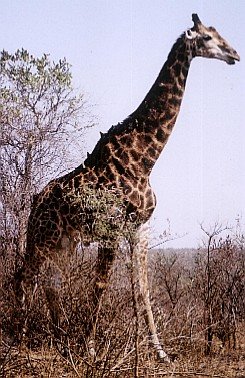


At Rietvlei, Giant trees are felled and relocated elsewhere. We are not told where? Even though these trees were planted in a boat park, many ducks and birds used to nest in and around them. The ‘Friends of Rietvlei’ supported the removal of all the big trees at Rietvlei because they were alien, without considering the fact that the Fisheagle will not have a perch to sit on. These large trees could have been re-planted in Rietvlei (Cape) to provide a perch for the Fisheagles. Why were they not?
Who benefited financially from these trees? They are worth over a thousand Rand each.
Where have they been relocated?
Could that money in any way compensate for what is lost in our reserve? The Fisheagles are still without a perch.
One should think that a conservation department would design a building around trees that is over hundred years old.
Our conservation departments are turning into glorified bush cutters.
They are blinded by a fynbos folly. They remove the habitat of wildlife without doing an impact study.
At Rietvlei the shady natural safe bush land has been turned into a grass and reed land.
It is too hot to enjoy in the summer and floods in the winter.
However, The view of the mountain in the backdrop is as always beautiful. Wildlife and plants will use whatever there is to use. People see the efforts of Mother Nature to restore harmony, and it is so beautiful. They are often not aware of the amazing that has been lost.
Saturday, February 26, 2011

Deforestation of Table Mountain
The conservation departments are running out of animals to kill in Cape Town so they are killing over hundred year old trees again. They are classed as Alien, and has to go, so that the new human aliens van enjoy a sun baked dust plane and the resultant rock and mud slides that will follow when the roots of these giants let go of the land they supported for over a century.
The natural inhabitants of these trees will be driven into the residential areas where they will be shot, poisoned and killed.
When bush fires and deforestation destroys the food supply of the baboons and other animals, the conversationalists would never consider a feeding scheme. They get shot when they venture into the path of humans, looking for a means to survive.
The natural inhabitants of these trees will be driven into the residential areas where they will be shot, poisoned and killed.
When bush fires and deforestation destroys the food supply of the baboons and other animals, the conversationalists would never consider a feeding scheme. They get shot when they venture into the path of humans, looking for a means to survive.
Tuesday, September 28, 2010
Intaka Island is a magical place


Friday, August 6, 2010

Thursday, July 15, 2010
Some dogs are lucky.

While standing here looking at my dog sleeping nice and warm under her blankets, dreaming her doggy dreams; oblivious of the cold, icy and rainy conditions outside.
She is a lucky dog with her basket by a window overlooking the front entrance to the house.
From her vantage point she can tune in on any activity going on in our house.
She is special because she is our only dog and shares her animal superiority with one other -- Amber the cat.
My mind wonders back to all those backyard dogs out there having to find shelter from the rain and cold. The lucky ones will have a shed or dog box where they can stay dry.
There are many other tied up dogs that are obtained for one purpose only and that is to bark at intruders. Some of them spend their lives tied to a pole and gets fed when someone remembers to do so. Many people go on holiday without considering the welfare of their dogs.
Like people, dogs shiver when cold, they feel the cold, and they have emotions and feel pain. Dogs, like people need love and care to thrive.
A dog will cry when he is unhappy. Sometimes a forgotten dog will cry for days, until one day they realize that crying only spends energy then they just suffer in silence, devoted till death.
A faithful skeleton till the end.
My dog was found by Blaauwberg Animal Trust. She was born at a squatter camp and on New Years Eve 2006, someone from the camp put her into a plastic shopping bag and tried to exchange her for booze money. He wanted R120 for her.

Thursday, June 17, 2010
Penguin chicks die from cold
It is time we change the focus of conserving local species; to try and save the species of the world in places where they can survive.
We may need to move animals around and that is going to be very difficult. We still know so little about ecosystems and even the function and interrelationships of the smaller life forms in the wild.
We may need to move animals around and that is going to be very difficult. We still know so little about ecosystems and even the function and interrelationships of the smaller life forms in the wild.
 A
AArticle from Cape Times 17-06-010

Tuesday, June 15, 2010
Sad World Cup News

A newspaper front page news article, glorifying someone who made a vuvuzela from a kudu horn highlights the latest killing of a rhino at the Kruger National Park.
Even if the rhino horn was not going to be used as vuvuzela, the poaching of animals for their parts is still sad.
Africans are sick and they regard money as more important than the few animals left in the wild. It seems that they will only stop when the last animal is dead.

Saturday, June 12, 2010
We are killing the earth
Africa can no longer sustain the human tide that devours everything in its path, while like locusts or parasites it plunders all natural resources in its path.
The majority of Africans take from the earth without giving anything back in return
It is no good to just to reduce pollution and waste. We need to heal the earth.

Every living thing needs healthy food, clean oxygen rich air and clean healthy water to survive.
It is no longer good enough to stop waste and to recycle; we need to actively heal the land, water and air we breathe.
Humanity is sick. Humanity dies from infections like aids, TB and the various flue viruses.
Even our food (swine flu, mad cow disease) is infected.
Infected people deposits polluted waste products into the soil and water. When they die their infected bodies are buried into the ground.
The ground itself is contaminated. People die from cancer and do not know where they get it from. We eat food that grows on decaying diseased pollution.
Toxic wastes are deposited into the air, or are buried into the ground, and because we can not see it we think it causes no harm.
Have you ever considered that the earth itself needs to be fed and needs to breathe and needs a clean water supply to sustain life?
The byproducts of nature heals the earth, while the byproducts of human occupation poisons it.
For the earth to heal and for people to grow healthy immune systems again we need to correct the balance of nature to human occupation.
We need to actively heal the earth.
Humanity is physically dying in front of our eyes.
How long will antibiotics have any effects against viruses?
How much stronger can we mix antibiotics to fight viruses before the antibiotics start killing the people it is supposed to cure? It is already happening right now!
We need to heal the earth so that the earth can sustain human life. So that the food we eat strengthens our immune systems.
We need to clean our air so that it contains the amount of oxygen again that will destroy germs.
A decrease of oxygen in the air means an increase of harmful organisms.
Poisonous particles in the air replace oxygen. This is serious; humanity is poisoning the very land we need for the survival of the specie.
It is no longer good enough to just recycle and hide toxic waste.

We need to drastic reduce the birthrate in areas where humans are overpopulated.
One baby per every two humans will gradually reduce the imbalance and decrease toxic waste.
We need to feed the earth, clean the waters and purify the air and remove the buried toxic waste;
Before nature enforces its own protective mechanisms against the human invasion.
We need to spend money to introduce earth healing strategies.
We must stop the burying of toxic wastes and diseased human carcasses.
We need to stop pouring human and chemical waste into our waterways, sea and air.
Before the earth dies, it will kill humanity.
Be warned!
The majority of Africans take from the earth without giving anything back in return
It is no good to just to reduce pollution and waste. We need to heal the earth.

Every living thing needs healthy food, clean oxygen rich air and clean healthy water to survive.
It is no longer good enough to stop waste and to recycle; we need to actively heal the land, water and air we breathe.
Humanity is sick. Humanity dies from infections like aids, TB and the various flue viruses.
Even our food (swine flu, mad cow disease) is infected.
Infected people deposits polluted waste products into the soil and water. When they die their infected bodies are buried into the ground.
The ground itself is contaminated. People die from cancer and do not know where they get it from. We eat food that grows on decaying diseased pollution.
Toxic wastes are deposited into the air, or are buried into the ground, and because we can not see it we think it causes no harm.

Have you ever considered that the earth itself needs to be fed and needs to breathe and needs a clean water supply to sustain life?
The byproducts of nature heals the earth, while the byproducts of human occupation poisons it.
For the earth to heal and for people to grow healthy immune systems again we need to correct the balance of nature to human occupation.
We need to actively heal the earth.
Humanity is physically dying in front of our eyes.
How long will antibiotics have any effects against viruses?
How much stronger can we mix antibiotics to fight viruses before the antibiotics start killing the people it is supposed to cure? It is already happening right now!
We need to heal the earth so that the earth can sustain human life. So that the food we eat strengthens our immune systems.
We need to clean our air so that it contains the amount of oxygen again that will destroy germs.
A decrease of oxygen in the air means an increase of harmful organisms.
Poisonous particles in the air replace oxygen. This is serious; humanity is poisoning the very land we need for the survival of the specie.
It is no longer good enough to just recycle and hide toxic waste.

We need to drastic reduce the birthrate in areas where humans are overpopulated.
One baby per every two humans will gradually reduce the imbalance and decrease toxic waste.
We need to feed the earth, clean the waters and purify the air and remove the buried toxic waste;
Before nature enforces its own protective mechanisms against the human invasion.
We need to spend money to introduce earth healing strategies.
We must stop the burying of toxic wastes and diseased human carcasses.
We need to stop pouring human and chemical waste into our waterways, sea and air.
Before the earth dies, it will kill humanity.
Be warned!
 I
IInformation about the photographs:
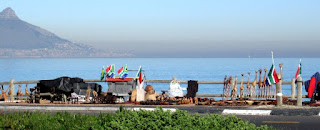
- First photograph: - rubbish deposited into stormwater drains running into the sea.
- Second photograph: - One can see the layer of pollution in which er live and breathe.
- Third photograph: - waste being cleaned from the beach. Much of it has been dumped by ships in our waters.
- Squatters occupying every bit of spare land. Every bush hides illegal residents. Their waste remains long after they stripped the area from wildlife and moved on.
Saturday, June 5, 2010
Global warming hits my Cape Town garden

It is official. Global warming is here. If there is any doubts, put it aside and do what the scientists of the day advise us to do to reduce greenhouse gasses; because we do not know how warm it will get before things change back to normal.
The shortest day is on 21 June. I remember that date because it is my mother's birthday. My mother has her birthday in the middle of the winter.
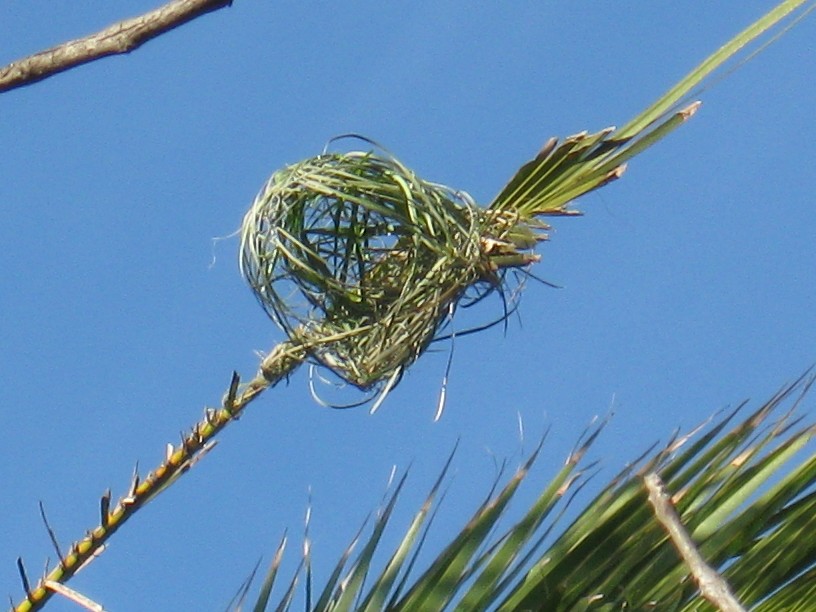
Today, 5 June, not yet mid winter, my birds are doing the spring thing.
They are breaking last year's nests down, building new ones and are in mating plume.

It is time conservationists put their old conservation thoughts on the subject into archives and start to work our how to preserve species during the global warming phase of the earth.
This is a challenge for humanity, but we have the intelligence to counteract these earth changes with drastic measures.
Nations must stop fighting against each other because now it is a time for co-operation; in the wake of the expected global natural catastrophes awaiting earth dwellers.
Thursday, May 27, 2010

Sunday, April 18, 2010
BLACK ROCKS
I am doing a study on large rocks that have been uncovered by the sea and decided to dedicate a blog to it.
You may check it out here in a few days time: http://blackrocks4capetown.blogspot.com/

You may check it out here in a few days time: http://blackrocks4capetown.blogspot.com/

Tuesday, March 16, 2010
Walkies no longer fun
.JPG)
I sling my old camera bag, containing yesterday’s bread plastic, over my shoulder and off we go on our walkies.
For some reason my husband decided that it is my job to carry the dog-poop bag.
From the moment we leave home, my upper lip and my brow moves closer to each other. My face just goes into a permanent screwed up mode.
I will only relax when the dog poops somewhere where I can cover it with sand, but no chance.
Since I started carrying the plastic bag, she seems to think it is her duty to poop on the best cut lawn in the most public place.
The dreaded moment arrives for me to unzip the little bag. Slip my hand into the bread plastic like a glove and pick up the warm soft substance from the lawn then carry the bag between my forefinger and thumb while my whole face goes into a screwed up spasm involving even my lower jaw.
There is only one waste paper basket on our walk – at the play park; so that is where it has to go. I see many people throw their plastic dog poop bags into the storm water drains. It will possibly wash up in the river or the beach, if it does not block the drains.
My husband said that I am a nurse, I should be used to carry poop, but this is different. I ‘gril tot in my klein toontjie’
I guess I am just not a good poop carrier yet, nurse or te not!
Saturday, March 6, 2010
Doggy poop in plastic

During our early morning strolls, when the dog takes us for a walk, we used to cover the doggy poop with sand, whenever possible.
Lately we are joining the recommendation from the municipality and we are using the old bread plastic wrappers to collect the dog poop and then place it into a bin, (usually at the park).
Some people just toss their doggy-doodle-bag into the long grass to be exposed when the lawn is cut.
My concern is: "Are we adding to carbon footprint by bagging the dog poop.
I have the following two reasons for saying this:
1. Doggy-doodle-filled bags are not recyclable.
2. Do we know the relationship between the organisms that decompose animal faeses in the wild, and the growth and distribution of fynbos?
In the early days our open spaces crawled with animal life.
Now that lawn mowing is commonplace, even in many of our reserves, we are drastically reducing the ability for animals to coexist on our open spaces. The result of this is less animal faeces.
Whenever you remove one aspect of nature, you remove a whole life cycle of insects. Do we fully understand the relationship of the insects that breaks down the animal faeces to the group of insects that helps with the fertilization and pollination of the plants in the wild?
Should there be a suggestion that if your doggy poop on open space, it is better to just leave it there and let nature do it's thing?
Tuesday, January 12, 2010
Frustrated dogs

We went to the beach this weekend and saw for the first time a lot of angry frustrated dogs on leads.
Dogs also need the freedom to play and run. Some of them love the water.
They are like little children. Keeping them tied up on such a large playing field is cruel and frustrating for them. It can turn a friendly natured pet into one that is frustrated, angry and vicious.
If the only reason that animals should be kept on leads is for the safety of beach goers, then perhaps the municipal law should allow for animals run and play on the beach if they are wearing muzzles.
Draft dog by-law
Find link to previous dog law post
New Oystercatcher Blog

We decided to separate the Oystercatcher blog
from the Plover blog by creating a new blog dedicated to Oystercatchers.
We decided to do this because the African Black Oystercatcher is considered to be near threatened.
They are very territorial and the pair at Bloubergstrand is presently in a process of losing their breeding space.
Sunday, November 29, 2009
How to give water to a tortoise

While some domestic tortoises learn to drink from a saucer, they enjoy a drink from a hose.
Aim the hose away from the tortoise, and not directly on the animal.
The water will run towards the tortoise and he will suck it up from the ground.
Make sure the tortoise does not get blinded by splashing mud.
In the wild, tortoises can supplement their fluid intake by eating succulents.
Baby tortoises need to have a drink soon after they hatch.
Friday, November 27, 2009
A Global Warming Post 27-11-2009

When we cast our eyes above to the vast expanse of the night sky we seem to look into eternity.
When we consider the depths of the earth we see the remnants of the earth’s past, in the molten rock formed during fires of destruction and recreation.
The precious stones and metals that delight humanity today, is the purest remnants of life long past.
What sort of crystals and metals will this generation leave to be discovered by the earth dwellers of the future?
Do we even consider the poisons we think we hide beneath the see and under ground?
If the poles are to shift and parts of the sea uncover an underwater world that was once the dumping site of nuclear waste; what effect will it have on the life of the earth?
How many unnecessary dormant years will have to pass before life on earth will be able to regenerate again? What inherent weaknesses will remain in DNA of earth dwellers in the distant future?
Will we follow in the footsteps of the Atlanteans, which according to legend destroyed the earth, because they used advanced crystal technology to gain supremacy?
Will we do the same with nuclear power?
What will happen when an earthquake uncovers buried radioactive material and leaks it into the water table or the atmosphere?
What precious metals will this generation of humanity push to the surface millions of years from now?
Will we once again be known as a race of people who destroyed the earth?
Do we even care?
Written by Ex Unitate Vires 27 November 2009
About the photograph:
If you look closely you may see see images of faces or little people in the picture.
it is as if the old tree is home to nature spirits.
Saturday, September 5, 2009
The life of a goose in a busy city suburb
 T
T


These photographs were taken by Wally. He had to try and stop the traffic in De Grendel rd. so that the geese could cross.
They can not fly yet and are at the mercy of dogs, people and other predators.
One year, at Rietvlei, we watched how they disappeared one by one over a period of about a week.
Saturday, August 22, 2009
Flowering Agave plants

The Agave plant (family Amaryllidaceae)
This plant flowers every ten years or so. After flowering the plant dies down to the ground but lateral buds spring from the underground part of the stem and a new plants are formed to continue the cycle.
For two of these plants to flower in the same garden in our area is quite unusual.

The photos of Agaves Amaryllidacea (Mexican succulent) were taken in a garden in Table View, Cape Town.

(The Photographs were taken by L Wolhuter)
Subscribe to:
Posts (Atom)