Showing posts with label rietvlei. Show all posts

Saturday, September 5, 2009

The life of a goose in a busy city suburb


These photographs were taken by Wally. He had to try and stop the traffic in De Grendel rd. so that the geese could cross.
They can not fly yet and are at the mercy of dogs, people and other predators.
One year, at Rietvlei, we watched how they disappeared one by one over a period of about a week.

Thursday, July 16, 2009

Flooded former Rietvlei, Cape woodland.


2oo9-07-16


The birds in our garden have been breeding since before the shortest day in the year, 26 June 2009.
It is freezing cold and there is snow on the mountains.
This is the first time that I see birds breeding in mid winter.

Is this mid winter breeding a reaction to all the alien trees being removed from our area in such a way that we are having seasons without any high vegetation on our floodplains?

Do the birds have to spread their breeding throughout the year so that each one gets a chance to nest?

Perhaps the birds know about a looming natural disaster that we are not aware of?

Whatever the case, while we are destroying the lung (woods) of Cape Town in an attempt to save, what we perceive as being the natural vegetation ( At some stage of the global history), in such a way that no consideration is given to birds and animals who settled in the woodlands of the area, life is struggling to go on.

Together with the plant species that we are trying to save, many birds are also becoming endangered and leaving their normal habitats.

For some reason we seem to be concentrating on removing the alien trees at the expense of all other mammals and wildlife who habitats our wetlands.

We seem to be introducing sand-veld (fynbos) vegetation into an area that lies below the flood-plain.
When the water rises, there are nowhere for animals and birds to go. There is nothing for them to climb onto.

Snakes are driven into domestic dwellings.
Larger animals that are stopped by fences just drown.

The motives behind the conservation efforts are good throw.
What is being done is done to save our plant species.
I just question the wisdom behind how it is being done.

I understand the removal of alien trees, but I do not understand why indigenous trees are not being replaced.

We have been removing alien trees since 2002. Today in 2009, while the rest of the world is planting trees, we are still removing trees without replacing them.
Is it one big conservation folly?


-------
Poor little tortoises.
This Table Mountain view is beautiful if we forget that it once hid behind a woodland.


Saturday, June 13, 2009

Monday, March 10, 2008

Experiencing Global Warming in Cape Town

I just watched the last half of a TV program on global warming this evening. Mention was made how animals are breeding out of season and therefore not synchronously with their food supply.

At home, in Cape Town, we were feeding the birds brown bread and apples in addition to the normal birdseed. The reason for us doing this was that so many of the trees in our road became too big and people were chopping them down. Another reason was that someone, in the area, decided to supplement his income by buying a chain saw and offered to chop people’s trees down for them. To compound this problem, the government decided to remove all the alien vegetation. Nearly all the trees planted in Cape Town over the last three hundred years, can be considered as alien. In fact since a large part of the city has been reclaimed from the sea, all the trees in that part can be considered alien.

When I was a child we did not have to spray our trees for fruit fly. Today if one does not spray a layer of poison over our fruit trees, we will not have any to pick.

Cockroaches were unheard of in Cape Town, but over the last few years they are becoming regular visitors in our homes. This year is the first year that I noticed small ones. That means that weather conditions are warm enough for them to breed in Cape homes.

I never heard of water pollution. I never considered algae as a problem. I used to think of it as fish food. A few years ago we filled our fishpond because the water became poisoned. The fish died and recovered when we changed the water. We needed to replenish the fishpond water more and more often until we decided to fill the pond with sand.

Last year tons of fish died at Rietvlei, Cape because of water pollution and algae growth. The warming of the ground around the dams due to the removal of all the trees may also have something to do with it. The birds that used to breed there had to move to domestic gardens and other unsafe breeding places.

We are replacing more and more nature areas with urban development.

Wild animals clash with townships that spring up on the borders of game parks. It is always the animals that have to go.

We have seen so many more deadly diseases among animals and people in the last years. In fact since about 1985 the number of deadly diseases affecting humanity has escalated at an alarming rate. That is in the last 12 years.

I can talk about this forever. We have other problems that feed global warming in Africa. Poverty, job shortages, wars and political instability are just a few.

Are we in a global crisis situation in Africa?

The only ones, who answer no to that question, are illiterates and skeptics who are too young to have experienced global change.

Saturday, August 18, 2007

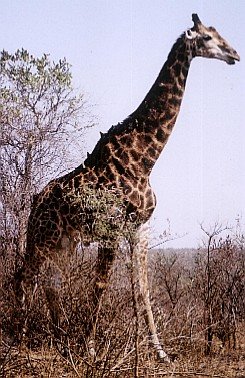
Confusion about the Rietvlei Nature Reserves in Africa

The Cape Rietvlei (wetlands) Reserve has a brother in Gauteng.


This can confuse visitors.

Lets clear up the confusion.

Here are the links – Check them out.

Gauteng:

Birding in Rietvlei

Rietvlei

Birding

Venues

Table view, Cape Town:

http://www.maclub.co.za/

Rietvlei

Visit Cape Town

Friends of Rietvlei

CSIR

Bird Watching

There are no large animals at the Rietvlei Wetlands Nature Reserve in Cape Town.

Tourists can become confused if they rely on a web-search for information.

The Above links to the two areas have been separated

The Rietvlei Wetlands Reserve is in a process of transformation, as the trees are at present being removed to create an indigenous fynbos vegetation area.

The bird species that have been visiting the vlei may change as the habitat changes. At present, the place is a mess but will still be of interest for recreation and birding. See Milnerton Aquatic Club

The best view of Table Mountain is still to be viewed from here.

Tourists can obtain a seasonal membership at MAC Club and enjoy a drink while viewing the sunset over Table Mountain from the windows of the club’s comfortable pub.

Or just go for a safe stroll in nature. The area is completely fenced and is very safe.

Remember to take a hat or sun umbrella in the summer as there will be no shade to protect you from the sun.

Day visitors to the nature area are welcome for fishing, bird watching, boating, or a picnic with the family.

The area is well worth visiting and a small area of indigenous fynbos garden, which has been planted by the municipality a few years ago, is an example of how the vlei may look in the future.

Even with the surrounding houses in clear view, the area is still very peaceful.

Artificial watering of the dusty flood plain during the dry summer .months may be a distraction.

You may wish to check with MAC Club if the pumps are running to avoid the noise pollution.

The mountain view over the water is magnificent. Sometimes the water is like a mirror giving a double image to Table Mountain and the clouds above. Beautiful!

Ps. Remember Africa has two southern points also.

Cape point is the most Southern POINT of Africa but Cape L’Agulhas is the actual most Southern geographic Area of Africa. Both have their own unique beauty.

Tourists can visit both.